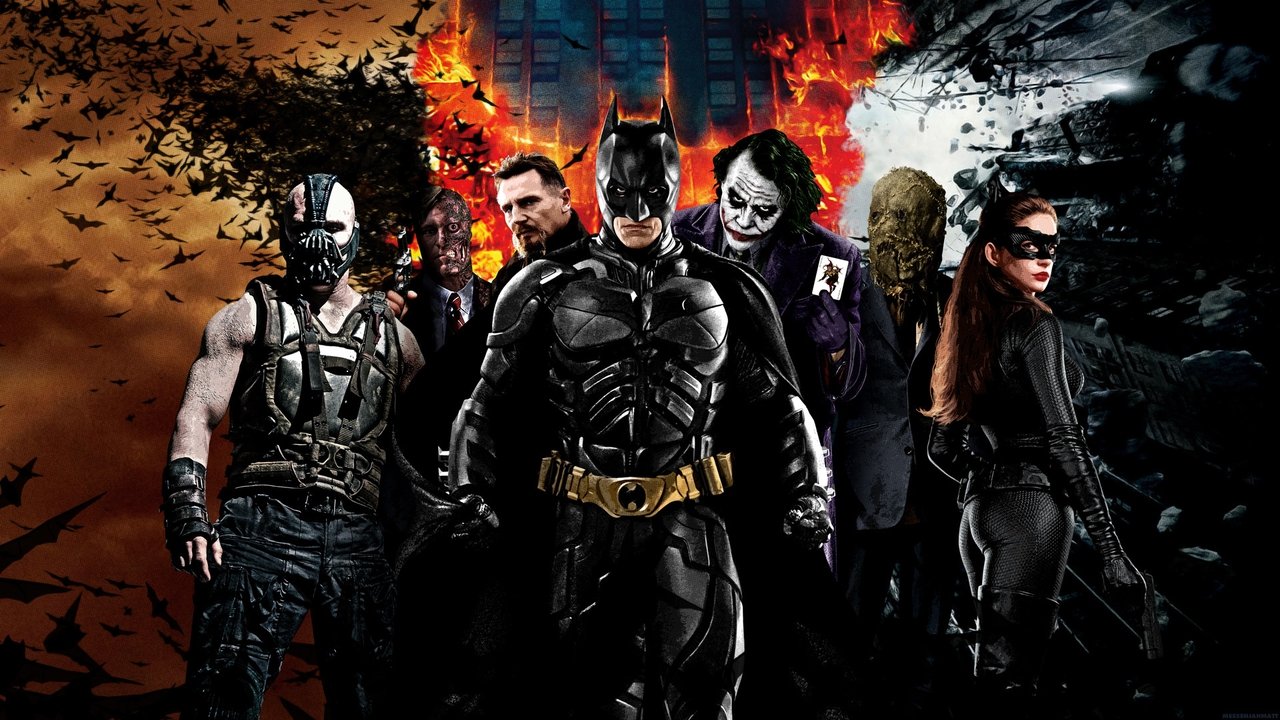
The Dark KnightComplete Watch Order Guide
Christopher Nolan's Dark Knight Trilogy is widely regarded as the greatest superhero film trilogy ever made and the gold standard for "grounded" comic book cinema. All three films form a single continuous arc — watch Batman Begins first and never skip straight to The Dark Knight. The trilogy ends definitively: there is no post-credits scene, no sequel hook.
The Dark Knight Release Timeline
What order should you watch The Dark Knight movies?
Release order — click any era to expand or collapse. All 3 released films shown below.
Batman Begins (2005) reset expectations for what a superhero film could be — a grounded, psychological origin story built on fear and identity. Nolan spent two full acts on Bruce Wayne before Batman even appears. Ra's al Ghul and Scarecrow as villains, a League of Shadows mythology, and a Gotham genuinely in crisis. The foundation everything else builds on.

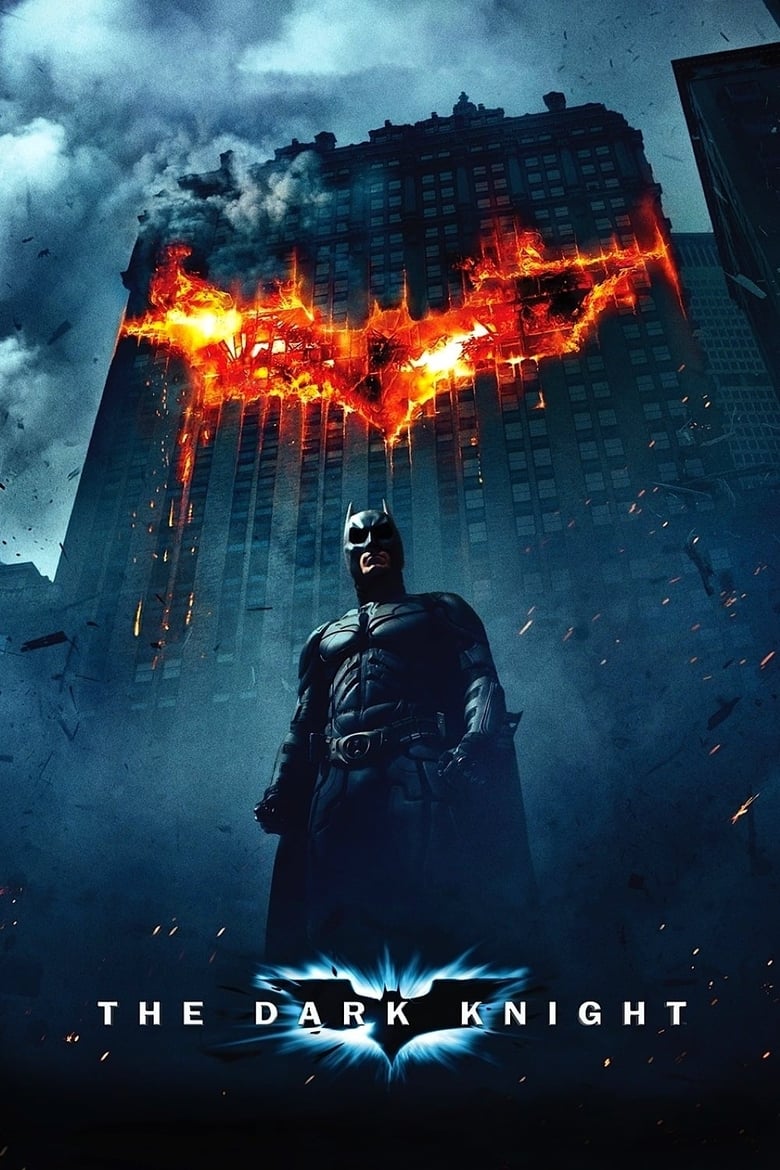
The Dark Knight (2008) is considered one of the greatest films ever made — not just superhero films. Heath Ledger's Joker won a posthumous Academy Award and redefined screen villainy. The film interrogates surveillance, moral compromise, and the cost of heroism. At $1 billion box office and a 94% RT score, it remains the defining superhero film.
The Dark Knight Rises (2012) is a sprawling finale set eight years after TDK. Bane is a physical and ideological counter to Batman, and the film reaches for a city-wide scale the first two films avoided. The ending pays off threads running through all three films. It divided fans but is essential to the trilogy's resolution.

Watch The Dark Knight in Order
Watch The Dark Knight movies in release order, starting with Batman Begins (2005) and continuing through The Dark Knight Rises (2012). The series spans 3 films, released between 2005 and 2012. Audiences rate the franchise 8/10 on average.
What order should you watch The Dark Knight?
For most viewers, release order is the recommended way to watch The Dark Knight. This is how the story was crafted and revealed to audiences — earlier films seed details, callbacks, and twists that pay off in later entries. Watching in release order preserves those reveals and matches the pacing the filmmakers intended.
The Dark Knight largely tracks its own in-universe chronology, so release order and chronological order overlap closely. You can use either without losing much, though release order is still the safest first watch.
About The Dark Knight
With minimal usage of CGI and a focus on character driven narratives, Christopher Nolan's dark, gritty portrayal of Bruce Wayne's transition into Batman and his struggles as Gotham's superhero set the precedent for modern superhero films.
Each film builds on the previous one, rewarding viewers who watch in sequence.
The Dark Knight by the Numbers
Every figure below is calculated from the full film list on this page.
- 3
- Films released
- 7
- Years running
- 8.0/10
- Average audience rating
- 8.5/10
- Highest rated
- 7.7/10
- Lowest rated
- 4 years
- Longest gap between films
The Dark Knight has 3 released films, the first in 2005 and the most recent in 2012.
The series has been running for 7 years, from 2005 to 2012.
Across its 3 rated films, The Dark Knight averages 8.0/10 on TMDB, from 84,823 audience ratings.
The highest-rated entry is The Dark Knight (2008) at 8.5/10 on TMDB.
The lowest-rated entry is Batman Begins (2005) at 7.7/10 on TMDB.
The longest gap between consecutive films is 4 years, between The Dark Knight (2008) and The Dark Knight Rises (2012).
Computed by Movies in Order from The Movie Database (TMDB) collection data for The Dark Knight, covering all 3 released films. Last recalculated September 2026.
The Dark Knight Fun Facts & Trivia
The Dark Knight (2008) is one of two superhero films ever nominated for a Best Picture Academy Award — Heath Ledger won posthumously for Best Supporting Actor.
Christopher Nolan shot The Dark Knight with IMAX cameras — six sequences total, making it the first major film to do so.
Christian Bale gained and lost 30 lbs repeatedly across the trilogy, cycling between The Machinist's extreme cut and Batman's physicality.
The Joker's pencil trick in The Dark Knight was not scripted — the other actors' shocked reactions are genuine.
Bane's voice in The Dark Knight Rises was re-recorded and remixed post-production after test audiences couldn't understand it.
Nolan refused to use CGI for the Bat-Pod chase sequence in The Dark Knight — the stunt team built a working prototype that real riders drove through downtown Chicago.
Frequently Asked Questions
What is the best order to watch The Dark Knight?
What is the first The Dark Knight movie?
What is the most recent The Dark Knight movie?
How many The Dark Knight movies are there in total?
How long does it take to watch all The Dark Knight movies?
What is the highest-rated The Dark Knight movie?
Can I watch The Dark Knight movies without watching them in order?
Where can I watch The Dark Knight movies online?
More Movies in Order
Prime for Young Adults
Students and 18-24 year olds can try Prime free, then pay just $7.49/month plus tax (50% off the regular price).
Up to 4 years or age 25, then renews at regular Prime price. Cancel anytime. Terms apply.
Want the classic franchise overview?
See the original timeline, full stats, and editorial intro on the franchise overview page.
View Classic Franchise Page →